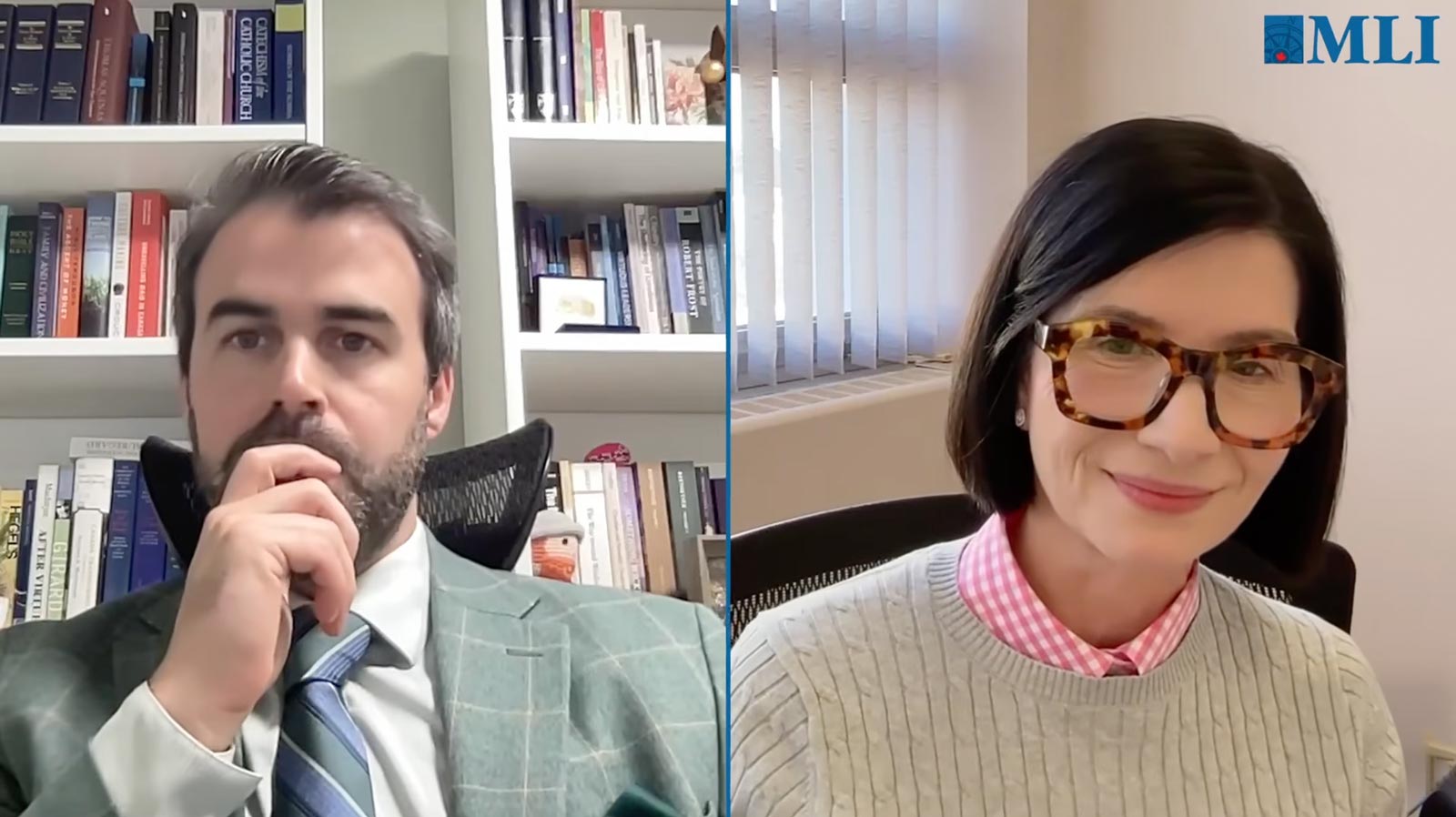
Jacqueline Leighton, an education psychologist and vice-dean of faculty development and faculty affairs at the University of Alberta, told Peter Copeland of the Macdonald-Laurier Institute that the main force shutting down learning on Canadian campuses is self-censorship. Students fear being ostracized or shamed by the larger group. Universities are supposed to be places where challenging ideas meet debate. Leighton has seen the climate from inside an institution that is supposed to operate on questions.
On the Inside Policy Talks podcast she argued that free speech is not only a legal right. It is a condition for learning, for scientific discovery, and for ordinary psychological development. When the act of asking a question is treated as potentially offensive, the work of the university stalls. “As an institution, we ask questions,” she said. “We need to be able to ask questions to further our understanding, and so it does trouble me if just the asking of a question is perceived as somehow offensive or problematic.”
The practical result is a classroom in which the range of what can be said narrows before any formal rule is broken. Students and faculty edit themselves in advance. Topics that might draw social punishment are avoided. The discovery that depends on testing an idea in front of other people becomes harder to do. Leighton’s point is that the damage is not limited to the people who stay quiet. It reaches the students who never hear the question that would have clarified the material, and the research that never gets pursued because the first conversation felt too costly. A campus that treats inquiry itself as a risk is no longer doing the job it was built for.